

What To Do If Your Child Gets a Tick Bite
(UPDATED May 1, 2023) As the weather warms up and summer approaches, many of us are getting excited for weekend family hikes, outdoor BBQs and camping trips. I know I am! But unfortunately, with the great outdoors, comes the not-so-glamorous reality that there are lots of creepy crawlies out there that can transmit some pretty nasty infections. Yes – I’m talking about TICKS! EEUUWWWW!!! There’s nothing quite as prehistoric-looking and spine-tingling as a tick (except for maybe a cockroach). And the knowledge that the blacklegged deer tick (Ixodes scapularis) – tiny creatures as small as a poppy seed or a sesame seed – can transmit infections such as Lyme disease (Borrelia), Bartonella, Babesia, Erhlichia, Anaplasma, Tularemia, Rocky Mountain spotted fever, relapsing fever, Colorado tick fever, Powassan virus, just to name a few, make them seem somehow even more like something out of a sci-fi horror movie.

And if you think that Lyme disease from blacklegged deer ticks is just a concern on the East Coast - think again. A Stanford study in 2014 found that nearly every park in the San Mateo, Santa Clara, Santa Cruz and Mendocino counties that was sampled (these are the parks that I hike with my children!) had ticks that were infected with Borrelia spirochetes (the organism responsible for Lyme disease). Another Stanford study in 2015 sampled additional parks from Sonoma County to Santa Cruz County and confirmed that virtually all of the parks contained ticks that were infected with Borrelia spirochetes, including a newly identified species called Borrelia miyamotoi. And shockingly, a report in 2019 by the CDC shows that tickborne and mosquito-borne infections have TRIPLED over the last 13 years. (1) This includes Lyme disease, which accounts for 82% of all tick-borne diseases. And the authors note that "underreporting might have substantially limited the number of cases analyzed. As noted, the number of Lyme disease cases reported to NNDSS is estimated to represent a fraction of incident cases." So the number is likely actually MUCH HIGHER! (If you want to cut to the chase and know what to do if your child gets bitten by a tick, DOWNLOAD my FREE GUIDE HERE!)
Why Worry About a Tick Bite?
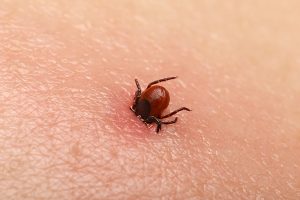
The biggest concern with getting a tick bite is the risk of transmission of a tickborne illness. Lyme disease takes the spotlight, with horror stories abounding on the internet, but Babesia and Bartonella can be just as devastating. In children, these infections can become an autoimmune encephalitis called PANS (Pediatric Acute-Onset Neuropsychiatric Syndrome), of which PANDAS (Pediatric Autoimmune Neuropsychiatric Disorders Associated with Streptococcal Infections) is a subset. Children with PANS/PANDAS develop a sudden-onset of fears, anxiety, OCD behaviors, rages, tics, bedwetting, handwriting regression and brain fog after exposure to certain infections or toxins. An infection like Lyme or strep can trigger an autoimmune, inflammatory reaction in the brain that results in neuropsychiatric symptoms - their brains are literally on fire. PANS/PANDAS and chronic pediatric Lyme disease have become a very large part of my holistic pediatric practice, and while I have been able to thankfully help many of these children recover from this devastating illness using a holistic integrative approach, my preference would be that kids never got it in the first place! And one of the first steps is making sure that we as parents know exactly what to do when our children get bitten by a tick. (Side note: PANS/PANDAS is such an important issue that I have been interviewed about it to educate other functional medicine practitioners. You can listen to my 2-part interview on Fx Medicine Australia HERE: PANDAS Part 1 and PANDAS Part 2 and my interview with Dr. Kara Fitzgerald on New Frontiers in Functional Medicine HERE: Functional Medicine Pediatrician Dr. Song on PANS/PANDAS Dx and Treatment)
Prevention is Key
The first and most important step is to try to PREVENT a tick bite in the first place. Prevention includes the following key steps:
- Stick to the middle of well-cleared paths. Ticks like to live in tall grassy areas and jump onto your skin as you’re walking by brushing up against the grass, or sitting on a log under a tree to cool down. Make sure that the kids don’t wander into tall grassy or shrubby areas. This is definitely not the time to be going off trail!
- Wear the right clothing, in the right way! Ticks can crawl under your shorts or down your shirt to find a nice warm place to take a bite and burrow in. As “uncool” as it may look, be sure to wear long pants and long sleeves and keep your pants tucked into your socks, and your shirt tucked into your pants so there are fewer potential points of entry. Lighter-colored clothing and socks make it easier to spot a tick on your clothes before it finds a way inside, so you can brush it away before it can even take a bite.
- Frequently apply a safe and effective insect repellent that works against ticks. I’m not talking about DEET, which I don’t recommend for routine use because of its associated toxicity. You may want to consider permethrin-treated clothing if your child will be spending an extended period of time outdoors in nature (I don't use this for my kids, and I don't recommend it for use on the skin directly as there is still toxicity associated with permethrin, especially with excessive use). Several studies have found various essential oils to be effective in repelling and killing ticks. A 2004 study found a lemon eucalyptus extract to be effective in reducing the risk of tick bites. A 2008 study found tansy essential oils to be very effective in repelling ticks by up to 64-72%. Other essential oils that may be effective tick repellents include rose geranium (aka Pelargonium graveolans), clove, lavender, palmarosa, pennyroyal, rose, and sweet myrrh.
If you’re a DIY kinda person, you can certainly make your own essential oil-based sprays, lotions or wipes. Or, if you’re like me and prefer something ready-made, you can try one of the following:
- Nature’s Cloak Mosquito, Tick and Insect Repellent with lemon eucalyptus, lavender, rose geranium, lemon tea tree and cedarwood essential oils
- Badger Bug Repellants with citronella, cedar, lemongrass, rosemary, geranium, and peppermint essential oils
- Fedorenko’s Bug Stick with lemongrass, citronella, peppermint, rosemary, cedar, clove, and geranium essential oils
Regardless of which essential oil product you choose to use, the key is to apply frequently, every 2-3 hours or more frequently after sweating or swimming. Remember – essential oils are effective because of their scent. If you can’t smell it, chances are a tick can’t smell it either and won’t be repelled appropriately.
- Do frequent tick checks. Ideally, you’ll find a tick crawling on your child’s clothes before it ever has a chance to bite, and just be able to flick it away. But if a tick has bitten, the earlier you find it, the less time it’s had to transmit its saliva that carries the Borrelia spirochetes and other bugs, and the less likely you are to contract Lyme disease and other tickborne infections. Just because a tick carries Borrelia and bites you does NOT mean that you will get Lyme disease. While it’s not entirely clear “how long” a tick needs to be embedded in order to transmit infection, it’s clear that the longer a tick is attached, the higher the risk of transmission. It has previously been thought that the tick must be attached for more than 24 hours to transmit Lyme, but it now seems that just a few hours may be enough – although the risk is much greater if the tick has been attached for over 24 hours. So early tick detection and removal is key to preventing Lyme disease.
While you’re out on the trails, take time to periodically scan their body for ticks. Carefully check behind and in your child’s ears, back of the neck, hairline and run your fingers through your child’s scalp. Look under the collar of their shirt and in their armpits. Check their waistline under their pants and any other possible points of entry. You are literally going to be looking for something that looks like a speck of dirt or a new freckle that you hadn’t noticed before. The nymph, the smallest form of the deer tick that is most prevalent in spring/summer, is literally the size of a poppy seed. Until you actually find one embedded, it can be difficult to appreciate just how tiny and difficult to spot they are!
Once you’re back home, take your child’s clothes off and wash in hot water or put in the dryer on high for 30-60 minutes. Take a warm shower IMMEDIATELY to wash away ticks that haven’t fully attached yet, and do another thorough tick check after the bath. Be as thorough as possible because most people with Lyme disease never notice the tick that gave it to them. Ticks love warm, moist, dark areas of the body so check hidden areas especially in or around the ear, hairline and scalp, bellybutton, armpits, groin/genitalia, or areas where clothing was pressed against the skin (waistline, underwear line, neckline).
- Check your pets. Pets can carry ticks into your home after being outside. They can also contract Lyme disease, so be sure to do a thorough tick check after you’ve taken your dog for a hike, or if they’ve just romped around your backyard that deer and other animals sometimes frequent.
- Check your gear. If possible, wash your backpacks and camping gear, or at the very least do as thorough an inspection as you can and shake everything out. A little tick found its way home from one of our camping trips, and being so tired, I just put away Kenzi’s unworn clothes back into her drawers instead of washing first (I know! What was I thinking?!?!). Of course, the next morning, Kenzi goes to put on some socks before we head out to school, and comes back and asks me what the little bump on her leg is! I knew it had only been attached for possibly 5 minutes, so I didn’t panic (much), and followed the plan outlined below.
What to do if your child gets a tick bite

The first thing to do when you find a tick on your child: STAY CALM and DON’T PANIC! The first time I found a tick on my son after we had been swimming in a river in Mendocino County, I thought there was a speck of dirt on his chest. But when I tried to flick it off and it didn’t budge, my heart sank and my stomach churned because I knew exactly what it was. It took everything in me to not freak out and show the panic in my eyes as I was gently pulling it out, all the while holding my breath. The next time I found a sesame seed-size tick was in my daughter’s ear while I was giving her a bath after she had been playing in our front yard. (We live in a suburban town in the Bay Area, but we do have deer that sometimes wander through our yard from the hills, so I’m sure some deer ticks were deposited on our grass as they were passing by – yikes!). Even this second time around, I thought it was a speck of dirt and tried to pick it off with my finger nail. I didn’t feel any less like freaking out, but somehow I managed to keep it together! The second thing is to REMOVE THE TICK.
How to remove a tick

There are several things you should NOT do when your child has a tick bite, besides not panic. DO NOT use Vaseline, gasoline, fingernail polish, rubbing alcohol, or any other caustic substance on the tick. DO NOT put a lit match next to the tick or squeeze or crush it. Doing any of these can inadvertently cause the tick to regurgitate more of its saliva that carries Borrelia and other infections into your body. What you SHOULD do:
- Have a small Ziploc bag open and ready.
- Use fine-tipped tweezers to grasp the tick as close to the skin as possible without crushing it. Pull with gentle steady pressure up away from the skin. BE PATIENT. Keep the pressure steady. This is where you might find yourself holding your breath trying not to scream like I did. Don’t twist or jerk up as this may cause the tick to break off leaving its mouthparts still embedded in the skin.
- After a little while, you’ll feel a sudden give as the tick releases its hold. DON’T PANIC and drop your tweezers! Gently put the tick into your Ziploc bag and close it (or if you’re like me, drop the tick, tweezers and all and zip that bag as fast as you can and then breathe because you’ve just been holding your breath for 5 minutes). Place a small moist cotton ball or piece of paper towel in the Ziploc bag so the tick doesn’t dry out before you send it for testing.
- If you’ve pulled out the tick but the head and mouthparts are still embedded, don’t dig around and try to get it out. Head to your local urgent care or your doctor to safely remove it completely.
- Immediately wash the area with warm water and soap, and apply tea tree oil or any other antiseptic that you have on hand.
- Note the site of the tick bite, and draw a circle with a ballpoint pen around the bite site so that you remember where it is.
(There are various tick-removing devices available. I’ve tried a few but I honestly haven’t found any as effective as a pair of good ‘ol-fashioned tweezers)
What To Do After a Tick Bite
Now that the tick is successfully removed, what next? What do you do with that little baggie holding that fear-inducing poppy-sized vermin? Do you give you child antibiotics? Do you just wait and see if your child develops symptoms of Lyme disease? Remember: The goal is to PREVENT LYME DISEASE. Lyme disease, if caught early and treated appropriately does NOT have to go on to be a devastating chronic illness.
Get the Tick Tested
The first thing I recommend doing immediately once you're back home is to send the tick to a lab to determine whether or not it even carries Lyme or other tickborne infections. Some labs (including most public health labs) will only identify whether the tick is a blacklegged deer tick, and only if it is, will they test to see if it carries Borrelia burgdorferi. While knowing what kind of tick it is may be useful, it is more important to know whether the tick actually carries any infections. I do recommend checking for co-infections, and not just for Borrelia alone. Ticks can carry and transmit more than one infection, and knowing what symptoms to watch for can be very helpful in early diagnosis. One of my daughter's ticks tested positive for Ehrlichia which she fortunately did not develop, and I was thankful to know to look for any subsequent symptoms of Ehrlichiosis rather than Lyme disease. I recommend tick testing through a lab like TickReport, TickCheck, or Ticknology. The turnaround time for these labs is 3-5 days from receipt of the tick. But in the meantime, while you're waiting for results, you’re still stuck with the question of whether or not to take prophylactic antibiotics.
Should I Give My Child Antibiotics?
To take prophylactic antibiotics or not – that is the question. Prophylactic antibiotics may prevent the development of Lyme disease if given as soon after the tick bite as possible. One study showed that a single 200mg dose of doxycycline given within 72 hours of tick attachment may be effective in preventing the classic erythema migrans rash within 4 weeks of a tick bite; however, the development of a rash is not necessarily a good endpoint as many people with Lyme disease never develop a rash, and this study had no long-term followup to determine if patients went on to develop symptoms of chronic Lyme disease. Most Lyme-literate practitioners do not believe that a single dose of antibiotics is adequate to prevent Lyme disease, and that at least a 3-week course of antibiotics is needed to ensure that you kill the Borrelia in all of its life forms – the free-floating spirochete form, the evasive cell wall-deficient form, and the dormant cyst form. If you stop antibiotics too early, you may not kill the Borrelia that is hiding out in its dormant cyst form and waiting for just the right moment to reactivate and convert to its free-floating spirochete form to cause trouble at a future date. But antibiotics? Are they really necessary? And especially if your child already has gut issues, or you’ve worked so hard to heal their gut? While a tick is unlikely to transmit Lyme and coinfections if it has been attached for less than 24 hours, there have been reports of transmission after just 16 hours. So, if you think that a tick has been attached for more than 16 hours, and especially if it looks engorged with blood, then in this case, I would strongly consider antimicrobial support. After caring for too many children and parents with chronic Lyme disease and other tickborne infections, I would rather mop up the after effects of gut dysbiosis and increased intestinal permeability (“leaky gut”) than mop up the after effects of chronic Lyme disease. How long should you/your child take antimicrobials? At least while you're waiting for the tick test results to come back. If the results are negative for any tickborne infection, then you can stop the antimicrobial. If you did not send the tick to be tested, or the tick test comes back positive, the antimicrobial(s) chosen should be taken for a minimum of 3-4 weeks. Which antimicrobial should you/your child take? The antimicrobial chosen may be herbal or pharmaceutical, or a combination of both. For adults, a 3-week course of Doxycycline may be recommended. Theoretical concerns regarding teeth staining with Doxycycline in children under 8 years of age no longer seem to be warranted, and the CDC now recommends "doxycycline as the treatment of choice for children all ages with suspected tickborne rickettsial disease... Previous concerns about tooth staining in children aged <8 years stem from older tetracycline-class drugs that bind more readily to calcium than newer members of the drug class, such as doxycycline." In fact the 2018 AAP Red Book states that "doxycyclne can be used for short durations (i.e., 21 dys or less) without regard to patient age ..." Amoxicillin and Azithromycin are alternative antibiotic choices for children. Herbal antimicrobials targeted to Lyme and coinfections can also be used alone or in combination with pharmaceutical antibiotics. Just remember, though, that herbal antimicrobials can still disrupt the gut microbiome like antibiotic drugs, and the gut needs to supported just as fully as outlined below. The manufacturers that I recommend for herbal formulas for Lyme and coinfections include BioResource, Researched Nutritionals and Beyond Balance. Stephen Buhner, a highly regarded Lyme herbalist, recommends the herb Astragalus with adult dosage of 3000mg daily for 30 days after a new tick bite. For prevention, Buhner recommends that adults take Astragalus 1000mg daily during your time in a Lyme-endemic or tick-infested area may be helpful in boosting your immune system and preventing Lyme transmission. This may be a good option for you and your family if you live in a high-Lyme area and don't want to potentially be on antibiotics for the entire season... Immediately after a tick bite, Buhner has also found applying a topical paste made of andrographis tincture and green clay to be helpful in preventing infection. If you or your child does get bitten by a tick, please discuss what antimicrobial regimen is best with your physician or a Lyme-literate practitioner. Bottom line: I would strongly consider giving your child an antimicrobial medication, pharmaceutical and/or herbal, for at least 3-4 weeks after a tick bite, especially if you believe the tick was attached for more than 16 hours and looks engorged.
How do your support your child’s gut with antibiotics?

The gut can and should be fully supported while taking antimicrobials for Lyme prevention - whether they're pharmaceutical or herbal. The goal is to minimize disruption to the gut microbiome and prevent gut dysbiosis and leaky gut (and yes, even herbal antimicrobials can cause gut dysbiosis). Be sure to give your child probiotics at least 1-2 hours after each antimicrobial dose, and continue for a month after the antimicrobial course is complete. To help you choose the best probiotic for your child, you can download my Guide to Choosing Your Child’s Probiotic. Load up on fiber-filled plant foods and awesome fermented foods like sauerkraut, beet kvass, “real” pickles like Bubbies, kimchi, miso soup, kombucha, coconut kefir and yogurt (if you tolerate dairy). Drink bone broth for all that healing glutamine and gelatin to support the small intestinal lining and prevent leaky gut. And be sure to eat a whole foods diet full of variety and color to ensure that your child’s gut gets all the phytonutrients it needs to stay healthy during this time.
Watch for Signs of Lyme Disease
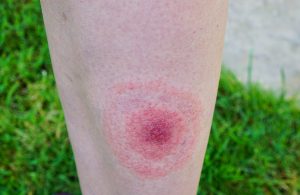
While the above precautions can be very effective in preventing Lyme disease, there may still be occasions where it’s not enough. Watch the site of the tick bite for an expanding bullseye rash, and watch your child for symptoms of acute Lyme disease. Only about 50-60% of patients with Lyme disease ever develop the classic “bullseye rash,” or erythema migrans, with a red ring that expands outward from the site of the bite. The vast majority of people with chronic Lyme disease never recall having a rash, so you want to watch for the other signs and symptoms of Lyme disease to know when to go see your doctor. Acute Lyme disease can develop anywhere from 3 to 30 days after a tick bite so you’ll want to be on guard for at least a month. Although again, if you’ve taken the above precautions, the chance that your child will develop Lyme disease is significantly lowered and you can breathe a little easier! 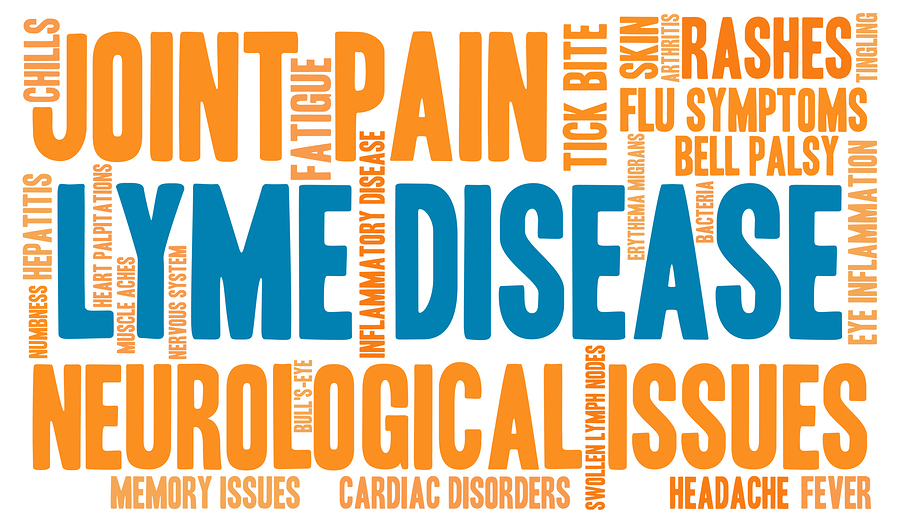 Go immediately to your physician if you or your child develops any symptoms of early or late Lyme disease below. The following list can also be found in a convenient Lyme Symptoms Handout from the Bay Area Lyme Foundation. Remember, most people with Lyme disease don't remember being bitten by a tick, so for some, late-stage Lyme symptoms will be their first sign of Lyme disease. Early Localized Stage (days to weeks after tick bite)
- Skin rash, commonly — but not always — a circular or bullseye rash around the bite area
- Headaches or stiff neck
- Flu-like ailments, including fever or chills
- Muscle and joint pain
- Profound fatigue or lack of energy
- A small bump or redness at tick bite
- Swollen lymph nodes
Early Disseminated Stage (weeks to months after tick bite)
- Expanding skin rash (more or larger rashes covering more parts of the body)
- Pain or numbness in arms and legs
- Extreme joint pain
- Profound fatigue
- Headaches and lack of energy
- Fainting
- Bell’s palsy (facial paralysis)
- Poor memory or inability to concentrate
- Heart palpitations
Late-Stage Lyme (months to years after tick bite)
- Arthritis, particularly in the knee or near the point of infection
- Nervous system problems including numbness and tingling in hands, feet, or back
- Severe headaches or migraines
- Problems with memory, hearing, and vision
- Stiff neck due to swollen tissues
- Chronic fatigue
- Problems with mood or sleep
- Inflammation of the brain
- Inflammation of the heart
PLEASE NOTE that in children, symptoms of Lyme may also include behavioral changes (anxiety, depression, fears, OCD behaviors, tantrums/rages), tics, developmental regressions (i.e., deterioration in handwriting), brain fog, slowed cognitive processing, and memory problems. If your child does develop signs of Lyme disease, please demand that your physician order more specialized Lyme testing through a lab like IGeneX or at the very least order a complete Lyme IgG and IgM Western blot and not simply a Lyme antibody screen with a reflex to Western blot. Unfortunately, the diagnosis of Lyme is highly controversial, but you do NOT want to miss a diagnosis of Lyme disease. Due to the inaccuracy of current testing methods, even the CDC recommends basing the diagnosis of Lyme on clinical symptoms and not on laboratory findings. If your physician will not test appropriately or is not well-versed in Lyme disease, please find a Lyme-literate practitioner near you through ILADS (International Lyme and Associated Diseases Society).
What else can I do to prevent Lyme disease?
I often wonder why it is that some children go on to develop PANS or chronic Lyme disease from a tick bite, and other kids do not? Why do some adults go on to develop chronic Lyme disease with devastating neurologic symptoms, and others develop no symptoms at all? I believe some of the answers lie in:
- Early detection and treatment
These are all the steps that you’ve already taken above! 😊
- Supporting any suspected underlying methylation or mitochondrial dysfunction
Many of the kids that I see with chronic illness, including PANS/PANDAS, have subtle red flags that they may have had underlying methylation and mitochondrial dysfunction that predisposed them to a greater risk for complications and long-term effects of certain chronic illnesses. These red flags include low energy, poor endurance, sensory issues, regressions after illness or prolonged recovery time compared with peers. They also include a family history of autoimmune illness, atopic disease (eczema, asthma, allergies), neurodegenerative disorders (autism, Alzheimer’s, Parkinson's, etc.), mental health disorders, infertility, blood clotting disorders, and early heart disease.
If your body is trying to fight off Borrelia or other tickborne infections, its methylation and mitochondrial stress have increased. If your methylation and mitochondrial function is already impaired, then this added stress can tap out your reserves and be the proverbial “straw that broke the camel’s back,” so that what seems like a sudden development of neuropsychiatric symptoms is really the culmination of a long backstory of previous methylation, mitochondrial, immune, and detoxification stressors.
How do you support your child’s methylation and mitochondrial function? After a tick bite, you can add supportive supplements like methyl-B12, l-methylfolate (or L-MTHF), coQ10, ribose, and L-carnitine.
But we’re talking about true prevention. So even before that tick bite ever occurs, optimize your whole family’s health with the steps below to bolster everyone’s defenses.
- Optimizing health
Optimal health begins with the gut and ends with the heart. Optimal health means supporting body, mind, and spirit with the following steps:
- Ensure a healthy gut microbiome with fermented foods, bone broth, and probiotics.
- Eat a diet rich in whole, unprocessed, organic foods with a variety of phytonutrients (a rainbow of fruits and vegetables), healthy fats and wild, free-range proteins.
- Avoid pesticides, heavy metals, and artificial flavors, colors and preservatives.
- Supplement lacking or insufficient nutrients such as omega-3 essential fatty acids (i.e., fish oil), vitamin D3, zinc, and magnesium.
- SLOW it down and teach your kids to manage stress through mindfulness and meditation (for tips on how to do this, see my blog post on the Holistic Management of Anxiety.
- Get outside in nature as often as possible (while watching for ticks!).
- Get enough sleep! Check out my blog posts on sleep: The 3 Things You Need to Know to Get a Good Night's Sleep and Eat Yourself to a Good Night's Sleep.
There you have it! All the steps you need to take if you or your child gets a tick bite!
Knowledge is Power!
Armed with the right information, your whole family will enjoy a healthy, happy summer in the great outdoors!
Be sure to download my FREE GUIDE on What To Do If Your Child Gets a Tick Bite to have on hand whenever you need, and be sure to share with any friends or family who want to know how to enjoy the great outdoors without worry!
 Thank you so much for taking the time to read this very important blog post on how to prevent and treat tick bites and hopefully prevent chronic Lyme disease. Please share with any family who loves spending time outdoors in nature, so we can all do our best to keep our children healthy and happy for a lifetime! xo Elisa Song, MD