

Top 10 Holistic Remedies for Your Child's Allergies
[UPDATED March 2024] Now that you've figured out what your child is allergic to and how to lower their allergy bucket in my last blog post, Top 10 Ways to Lower Your Child's Allergy Bucket, it's time to learn how to manage your child's allergy symptoms, naturally! Read on for my Top 10 list of pediatrician-approved natural remedies that can significantly reduce allergy symptoms, without the drowsiness that many over-the-counter and prescription allergy medications can cause, or the problems that long-term steroid use can create.
#1 Clean up your child’s diet!
- Ensure that your child’s diet is rich in anti-oxidants and anti-inflammatory foods. Try to have your child "eat a rainbow" of fruits and vegetables every day.
- Eat Omega-3 rich foods, like wild salmon or other “safe” seafood. You can download a consumer guide for “Best Choices” of seafood through the Monterey Bay Aquarium’s Seafood Watch (Monterey Bay Seafood Consumer Guide)
- Encourage fermented foods or supplement with probiotics as a powerful way to strengthen the immune system and help relieve allergy symptoms. If you need help picking the right probiotic supplement, check out the supplement section below.
- Avoid dairy products during allergy season as dairy can thicken mucous secretions, making unpleasant allergy symptoms even less tolerable, in addition to triggering histamine release.
#2 Eat foods that are rich in Quercetin.
Quercetin is a "natural anti-histamine" with powerful anti-oxidant and anti-inflammatory properties.
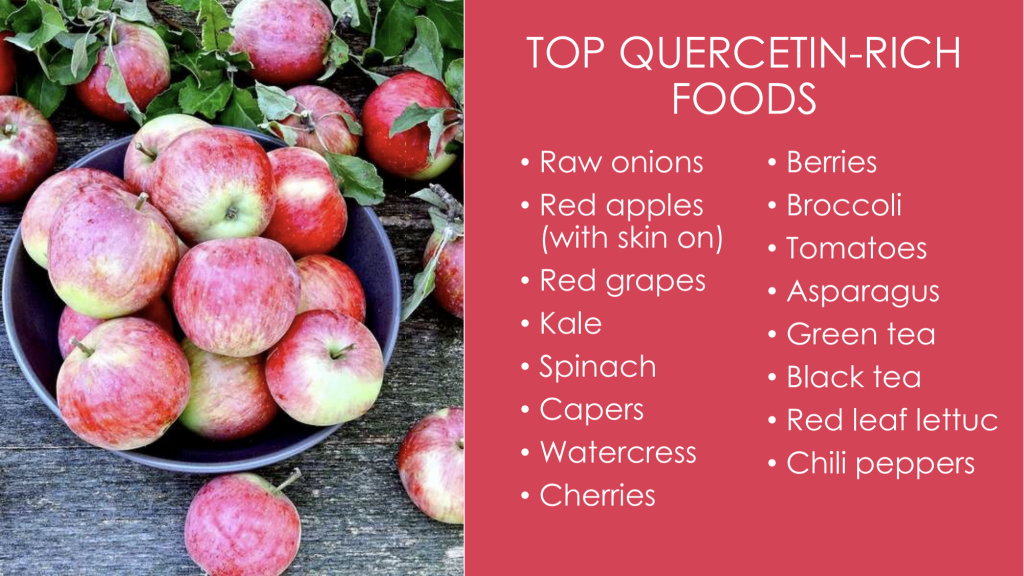
Quercetin is found in many foods, such as raw onions, apples (especially the skins!), red grapes, kale, spinach, capers, watercress, cherries, green and black tea leaves, bee pollen, and chili peppers.
Here's a great place to start:
#3 Avoid foods that are rich in histamines or that cause histamine release.
Unfortunately, chocolate, wine, and strawberries top this list! Other foods that can cause histamine release or are high in histamines include avocados, bananas, dairy, eggs, oranges, peaches, pineapples, raspberries, spinach, and tomatoes. Yes – some of these foods are also on the high quercetin list, so you’ll have to see how your child reacts.
Fermented foods, which have tons of health benefits, can potentially cause increased histamine release and may need to be minimized during high-allergy season.
Artificial flavors, colors, and preservatives can increase histamine release. Yet another reason to stick with WHOLE, unprocessed foods!
#4 Avoid foods that may cross-react with pollens you are sensitive to.
This is known as Oral Allergy Syndrome - you know that itchy mouth you get after eating cantaloupe - it could be due to your ragweed allergy! What are other examples of cross reactivity?
- Ragweed Pollen - bananas, zucchini, cantaloupe, sunflower seeds, cucumber.
- Grass Pollen - melons, oranges, swiss chard, tomatoes, watermelon, wheat.
- Alder Pollen - almonds, apples, cherries, celery, hazelnuts, parsley, peaches, pears.
- Birch - apples, plums, carrots, cherries, fennel, walnuts, pears, potatoes, peaches, wheat.
#5 Eat local honey!
Local honey has been shown to reduce allergy symptoms. Local honey contains pollens from all the local plants, flowers, trees, and grasses that your child is allergic to. So why take it? Small frequent doses can “desensitize” you if taken before allergy season starts, similar to the concept of allergy shots. This is best taken 2-3 months before allergy season starts.
Take 1-2 teaspoons daily for several months before pollen season begins.
#6 Irrigate your nose to remove allergens daily, if not more frequently.
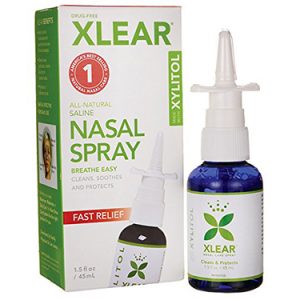
This can be done with sinus rinses, like a neti pot, Nasopure, or Neilmed sinus rinse, or saline sprays like my favorite - Xlear nasal spray.
#7 Take evidence-based supplements for allergy relief!
Quercetin, Vitamin C and homeopathic Allergy Calm (see below) are my trifecta for seasonal allergy relief. Read on to find out why these are my allergy go-to's. You'll also learn the additional supplements to use if you need even more support. To help you and your child get the allergy relief you need, I've bundled my Quercetin, Vitamin C, and Allergy Calm supplements in an easy-to-use Allergy Support Kit at special savings, just in time for allergy season! You'll even get to choose whether you want capsules, chewables or liquids.
The Allergy Relief Trifecta - Quercetin, Vitamin C, Allergy Calm
Quercetin
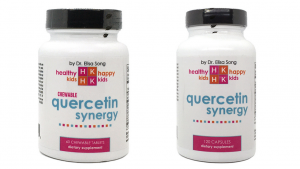
As mentioned above, Quercetin is a powerful natural “anti-histamine” or "mast cell stabilizer." It reduces histamine release from mast cells when exposed to an allergen, so it works better as a preventive. When your child already has a ton of histamine floating around, then overlapping Quercetin to prevent further histamine release while taking a medication anti-histamine like Claritin for a few days to mop up the histamine that has already been released, can work wonders! When combined with other supplements like Vitamin C, Bromelain, N-acetylcysteine and Stinging nettle, Quercetin can pack even more allergy punch, safely and effectively. (1,2) Concurrent vitamin C supplementation helps to activate quercetin. Bromelain is an enzyme found in pineapples that has anti-inflammatory properties and can help thin mucous, along with N-acetylcysteine. Stinging nettle is another anti-inflammatory herb that blocks histamine production and supports healthy nasal passages. I've searched for the best high-quality, effective supplements for you and your family, and am proud to bring you an amazing product that contains all four of these supplements - our Quercetin Synergy chewables and Quercetin Synergy capsules which you can find out our Allergy Support Kit..
Quercetin as a supplement is generally well-tolerated, and side effects are uncommon at doses of 500-1000mg/day. The most common side effects are stomach upset, headache, and tingling of the arms and legs. When consumed in food, quercetin is safe for pregnant and breastfeeding women. However, there are no studies on safety of quercetin supplements during pregnancy or lactation so please consult with your healthcare provider before taking. The following are potential dosages to consider for maintenance if you or your child has allergies. For the first week when trying to get allergy symptoms under good control, I've found that a "loading" dose of quercetin at double the below dosages paired with an over-the-counter antihistamine like Claritin or Zyrtec can work great. An antihistamine mops up the histamine that is already floating around in your bloodstream causing all of your systems, while quercetin stabilizes mast cells so that they release less histamine in the first place. Once the histamine is mopped up, an OTC antihistamine typically can be stopped and used "as needed."
Potential Quercetin Dosages (for daily maintenance):
- 2-4 years: 50 mg daily
- 4-8 years: 50-100 mg daily
- 8-12 years: 100-200 mg daily
- 12-18 years: 200-400 mg daily
- 19+ years:400-1000 mg daily
- LOADING DOSE: When starting with Quercetin, a "loading dose" of 2X the daily dose for 7 days may be used to get those allergy symptoms under control as quickly as possible!
Vitamin C
Vitamin C has an amazing number of health benefits, not least of which is as a natural antihistamine. Vitamin C has been shown to reduce blood histamine by up to 50%. Vitamin C can reduce all of those nasty upper respiratory symptoms caused by seasonal or environmental allergies, including pollens, dust, mold and pet dander. (3, 4)
Vitamin C is water-soluble, which means you pee out any extra that you don’t need or use. Vitamin C has very low toxicity and even at high doses is very unlikely to be harmful, with the most common side effects being diarrhea, nausea and abdominal cramps. While there are many different Vitamin C formulations available, we have a variety of Dr. Song-approved Vitamin C liquid, capsules, chewables and gummies to choose from in our Allergy Support Kit.
The typical adult dosage shown to reduce histamine and allergy symptoms is 2,000 mg (or 2 grams) daily. Children's dosages can be modified accordingly.
Potential Vitamin C Dosages (for allergy relief):
- 2-5 years: 250-500 mg daily
- 5-12 years: 500-1,000 mg daily
- 12-18 years: 1,000-2,000 mg daily
- 19+ years: 2,000 mg daily
Additional Allergy Relief Supports
Zinc
Zinc is one of the most common nutrient deficiencies in children. Not only is zinc deficiency associated with allergic rhinitis (23), it's also associated with frequent infections, picky eating, eczema, attention/focus issues, mood/behavior concerns, and sensory issues (i.e, can’t stand loud sounds like the blender or vacuum. Covers their ears when the toilet flushes. Totally bugged by the seams in their socks, Won’t wear jeans – only the softest clothes for them. Shoes always too tight, or too loose, never just right. You get the idea.). Its no wonder so many kids could benefit from extra zinc!
I have personally vetted a variety of Healthy Kids Happy Kids Zinc supplements in different formats for every preference - liquid, low-sugar gummy, chewable, and capsules for easy use! When supplementing with zinc, the most common side effects are nausea and vomiting, so taking it with food can be helpful. The following dosages are based on the Tolerable Upper Intake Levels reported by the NIH and what I use in clinical practice. Please check with your doctor if you take higher amounts. High doses of zinc for prolonged periods may deplete copper, which has its own set of health concerns.
Potential Zinc Dosages:
- 0-1 year: 4-5 mg daily
- 1-3 years: 5-10 mg daily
- 4-12 years 10-25 mg daily
- 13-18 years: 25-35 mg daily
- 19+ years 25-40 mg daily
Fish Oil
Omega-3 essential fatty acids play an important role in optimizing immune function, especially when it comes to asthma and allergies. Higher levels of omega-3 fatty acids in the blood and in the diet (from delicious fatty fish like wild salmon!) have been found to reduce the risk of children developing asthma, allergic rhinitis, and become sensitized to environmental allergens like dustmites. (5,6,7,8,9)
Fish oil supplements are, in general, very well-tolerated. If you get “fish burps,” try freezing your fish oil capsule before eating. High doses may cause nausea and loose stools, and occasionally easy bruising or bleeding. When choosing a fish oil, be sure to choose one that has been tested for impurities like mercury and is delivered in the more easily absorbed triglyceride form. I've taken the guesswork out for you with my Healthy Kids Happy Kids Omega-3 Synergy liquid - seriously the BEST tasting fish oil I have every had! Omega-3 Synergy liquid provides the EPA, DHA and DPA (DPA is missing in most other fish oils), in triglyceride form. for a delicious, clean, pure, and easily absorbed omega-3 supplement.
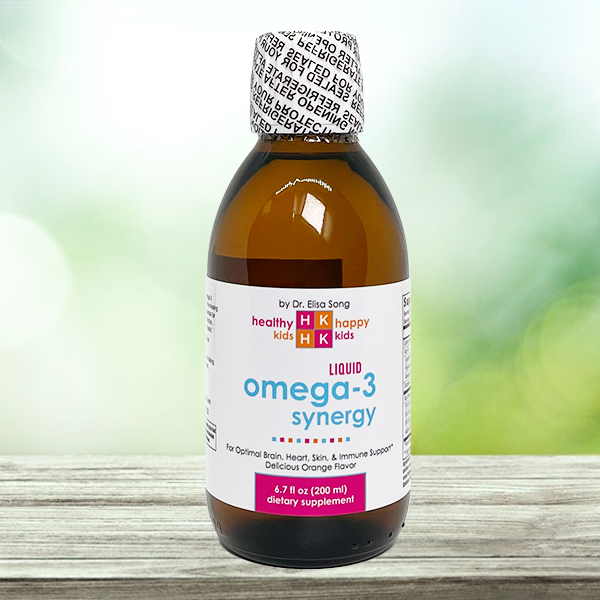
The dosages I recommend for my patients vary widely, depending on what else may be going on with their health. And for patients with chronic concerns like asthma, allergies, autoimmune conditions, ADHD, anxiety or autism, I may use higher dosages.
Potential omega-3 fatty acid doses below are based on a combined EPA + DHA dose:
- 0-1 years: 50-100mg daily
- 1-5 years: 100-500mg daily
- 6-12 years: 500-1,000mg daily
- 13-18 years: 1,000mg daily
- 19+ years: 1000mg+ daily
Probiotics
The gut-immune system connection plays an important role in preventing and relieving allergy symptoms. Some gut bacteria release histamine, while others break down histamine. When we're having a lot if histamine symptoms - a healthy gut microbiome is key to finding quick allergy relief. Various Lactobacillus and Bifidobacteria strains have been shown to prevent allergy flareups, reduce the severity of nose and eye allergy symptoms, reduce medication use, and improve the quality of life in patients with allergic rhinitis Breastfed babies given Lactobacillus reuteri supplements from 4-12 weeks of age were even found to be 3X less likely to develop allergic rhinitis at 9 years of age! (10,11,12,13,14,15).
Suggested probiotic doses vary widely depending on the specific health concerns that are being addressed. I recommend a “broad-spectrum” probiotic with as many different probiotic strains as possible. The gut microbiome looks very similar to an adult microbiome by 2 years of age. That means that all family members over 2 years can take the same probiotic. Children under 2 years should get an infant-specific probiotic.
These are the typical probiotic dosages I use in my practice:
- < 2 years ~ 5-10 billion cfu mixed flora
- > 2 years ~ 10-25 billion cfu mixed flora
When it comes to probiotics, though - more is not always better. The key is having the a variety of probiotic strains that have proven activity against the condition you're trying to manage. I've handpicked my Healthy Kids Happy Kids Probiotics + Enzymes to include evidence-based probiotic strains for the most common pediatric conditions - including allergies! These include Lactobaciilus rhamnosus with proven benefits for asthma, eczema and allergies, and a spore-based probiotic not commonly found in other probiotic formulations, Bacillus coagulans, Among its many benefits, Bacillus coagulans provides amazing immune support against allergic rhinitis and even viral upper respiratory infections. (16,17).
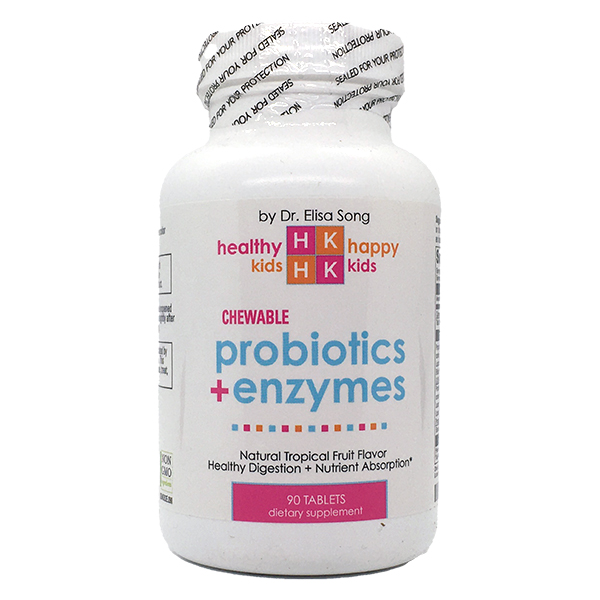
The typical dosage for my Healthy Kids Happy Kids Probiotics + Enzymes is;
- 1 chewable tablet taken before meals, 2-3 times daily, for children 2 years and up.
Vitamin D
The "Sunshine Vitamin." By now many of you know that Vitamin D is one of my favorite supplements ever. That's why I wrote my article, 'Why All Kids Need Vitamin D." Vitamin D has too many immune, brain, hormone, and mood benefits to list here, so check out my article and in the meantime know that when it comes to allergies, Vitamin D definitely shines! Vitamin D deficiency has been linked with allergic rhinitis in an inverse manner - the lower patient's Vitamin D blood levels, the higher the severity of their allergy symptoms. On the flip side, supplementing with Vitamin D was found to improve allergic rhinitis and significantly decrease symptoms and medication use. (18,19,20,21) Yeah - it's still one of my favorite vitamin! (OK for you sticklers out there, Vitamin D is actually a hormone, not a vitamin - but you get the drift).
For supplementation, Vitamin D3 should be used, not Vitamin D2, because of Vitamin D3's more optimal immune and epigenetic effects. (22). While Vitamin K deficiency is uncommon in the United States, I recommend that teenagers and adults take Vitamin K with their Vitamin D supplements to reduce their risks of atherosclerotic heart disease. Vitamin K2 (menaquinone) is the preferred form for supplementation. Fortunately, many Vitamin D3 supplements are already synergistically combined with the appropriate amount of Vitamin K2.
Vitamin D deficiency is one of the most common nutrient deficiencies in children and adults, so it can take quite a bit to get optimal blood levels. Given that most children and adults are deficient or insufficient in Vitamin D3, ideally blood levels would be measured to know what dosage is needed to first get to optimal levels and then be able to maintain those levels. In my clinical experience, the ideal 25-OH Vitamin D blood level for optimal immune health is between 60-80 ng/ml. Be sure to read my article, Why All Kids Need Vitamin D, to learn more about testing and optimizing 25-OH Vitamin D levels.
While there are many reputable sources of Vitamin D3 and Vitamin K2, I’ve handpicked the highest quality supplements to take the guesswork out of it for you. My Healthy Kids Happy Kids Vitamin D+ gummies, Vitamin D3 liquid, Vitamin D3/K2 Liquid, and Vitamin D3/K2 Capsules are exactly what I give to my whole family and recommend for all of my patients.
Potential Vitamin D3 Dosages (for daily maintenance):
- 0-1 year: 400 IU daily
- 1-6 years: 1,000 IU daily
- 7-12 years: 2,000-3,000 IU daily
- 13-18 years: 3,000-4,000 IU daily
- 19+ years: 5,000 IU daily
#8 Use homeopathic medicines to provide immediate relief from those annoying allergy symptoms.
Homeopathic medicines are my first go-to for any type of ailment. No side effects, no drug interactions, safe for infants and pregnant/breastfeeding women, AND they work! If you’re not familiar with homeopathic medicines, please refer to my blogposts What is Homeopathy – Part 1 and What is Homeopathy – Part 2 for more information on what they are and how to use them, including how to open up those blue tubes and get those pellets - frustration free!
Homeopathic medicines work best when tailored to your child’s individual symptoms.. If you don’t have access to an awesome integrative pediatrician, then you can always try combination homeopathic medicines. Boiron's AllergyCalm (formerly known as RhinAllergy) is a combination homeopathic medicine that can combat the most common allergy symptoms that is included in our Allergy Support Kit.

Be sure to download my FREE guide to The Top Homeopathic Medicines for Allergies. This guide will help you know exactly which homeopathic medicine to give for your child's allergy symptoms!
#9 Acupressure for allergy relief
Acupuncture is a powerful option for both prevention and treatment of allergies. Acupressure can be used at home, on you or your child, along with various essential oils that can help keep allergy symptoms at bay.
Acupressure uses your gentle, loving, yet firm massage on specific acupuncture points to stimulate healing
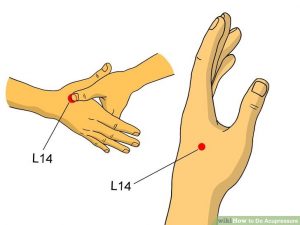
Points that can be massaged specifically for allergy include:
"Large Intestine 4" - located in the webbing between the thumb and index finger - is especially good for combating sinus headaches, congestion, runny nose and fever.
#10 Use essential oils.
Essential oils can be diffused or massaged into specific acupressure points. Some essential oils that are particularly helpful for allergies are chamomile, eucalyptus, lemon, lavender, and peppermint.
When using essential oils for acupressure, you can add a few drops of essential oil to a "carrier" oil like olive oil or jojoba oil, and use this to massage into the specific acupressure points mentioned above. The younger your child, the more dilute the essential oil should be. Stronger oils like eucalyptus and peppermint should not be used around the eyes, nose or mucous membranes and may cause skin irritation. They should be patch tested on a small area of skin before using.
Be sure to buy essential oils from a reputable manufacturer to ensure that they have the intended therapeutic qualities. Some of my personal favorites are Elizabeth van Buren, DoTerra, Vibrant Blue Oils, and Young Living.
So, put away that tissue box, take control of your allergies, and feel great outdoors again!
References:
- https://pubmed.ncbi.nlm.nih.gov/11056414/
- https://pubmed.ncbi.nlm.nih.gov/32507438/
- https://pubmed.ncbi.nlm.nih.gov/23666445/
- https://pubmed.ncbi.nlm.nih.gov/1578094/
- https://www.nature.com/articles/1602213
- https://ehjournal.biomedcentral.com/articles/10.1186/s12940-018-0370-5
- https://www.frontiersin.org/articles/10.3389/fphar.2020.01244/full
- https://www.sciencedirect.com/science/article/pii/S1323893014000100
- https://pubmed.ncbi.nlm.nih.gov/29221817/
- https://pubmed.ncbi.nlm.nih.gov/21340202/
- https://www.ncbi.nlm.nih.gov/pmc/articles/PMC3784923/
- https://www.annallergy.org/article/S1081-1206%2810%2960219-0/fulltext
- https://www.frontiersin.org/articles/10.3389/fmicb.2021.688137/full
- https://www.karger.com/Article/FullText/515352
- https://www.medscape.com/viewarticle/932591
- https://data.mendeley.com/datasets/dxx7czctmx/1
- https://www.tandfonline.com/doi/abs/10.3810/pgm.2009.03.1971
- https://www.ncbi.nlm.nih.gov/pmc/articles/PMC5410413/
- https://erj.ersjournals.com/content/46/suppl_59/PA2559
- https://www.sciencedirect.com/science/article/abs/pii/S1877032020304425
- https://www.archivesofmedicalscience.com/Clinical-and-immunological-effects-of-vitamin-D-supplementation-during-the-pollen,63426,0,2.html
- https://www.frontiersin.org/articles/10.3389/fimmu.2022.790444/full
- https://www.ncbi.nlm.nih.gov/pmc/articles/PMC8759868/